Powered By Blogger

Monday, 3 June 2013

Fr Clarence Gallagher (1929-2013)

Rettore Magnifico
Fr Clarence Gallagher SJ (1929-2013)


One Saturday morning in 1992, the 75th anniversary of the founding by Pope Benedict XV of the Pontifical Oriental Institute, Rome (the Orientale), the Rector, Fr Clarence Gallagher SJ, took a phone call from Mgr Stanisław Dziwisz, personal secretary of Pope John Paul II. Did Fr Clarence have anything planned for that evening and, if not, would he care to join His Holiness for some supper? And, could he bring his vice-Rector with him? There could, of course, be but only one reply and that in the negative once and the affirmative twice. The vice-Rector, it should be noted, was the late Fr. John F Long SJ, an American Jesuit known as the “the grand old man of Catholic-Orthodox relations” (died aged 80 years on September 20, 2005; he retired from the Orientale in the same year as Fr Clarence stood down as Rector, 1995).

That evening over a memorable supper His Holiness explained that he was much troubled with the state of dialogue with the Orthodox Churches and thought that Fr Clarence might be able to help. Could he arrange to bring some of the Orientale’s experts to brief him? Fr Clarence later said: “I thought we would hear no more about it. I thought he had just got a bee in his bonnet and that he would soon forget about the whole thing.”

Two weeks later he got another phone call from Mgr Dziwisz: Could he bring his experts along on Tuesday morning at 11? This time only one affirmative was required!

In all Fr Clarence arranged eight seminars in this series for the Pope. They were all held on a Tuesday morning at 11 o’clock in the papal private library. After about two hours they would wind it up by paying a visit to the private chapel and then sit down to lunch. Fr Clarence would later remark that Pope John Paul II was a “splendid host. The conversation was always brilliant. He had a tremendous intellect, one of the best I have ever come across, along with Fr Kolvenbach (Peter Hans, SJ, Fr General, 1983-2008, and a predecessor of Fr Clarence as Rector of the Orientale, 1981-83). He had a remarkable memory, especially a wealth of stories about things that happened when he was a young priest, and a great sense of humour. And the food was always marvellous…”

Fr Clarence explained that a Tuesday was in theory the Pope’s day off. His Holiness told him: “I try to use some of it for reading, to catch up on my theology.” This latter point accompanied by a deprecatory broad grin.

And it was thus that Fr Clarence became to Blessed Pope John Paul II “rettore magnifico”. It also got him into trouble with the Grand Chancellor of the Orientale, His Eminence Achille Cardinal Silvestrini, Prefect of the Congregation for the Oriental Churches.

A wealthy widow, Mrs Anna Maria Gruenhut Bartoletti Aletti, had bequeathed one of the homes she had inherited from her late husband, Dr (possibly Count) Ezio Aletti, to the Society of Jesus. This was a late nineteenth-century liberty-style palazzo in via Paolina, just round the corner from the Basilica of Saint Mary Major (the other home was in Trieste). The good widow expressed a desire that it might become a centre of intercultural meeting and reflection. The Father General of the Jesuits thought to ask Fr Clarence if he could do anything appropriate with it. Fr Kolvenbach was not noted for asking stupid questions, or, for asking questions to which he did not already have a shrewd idea of the answer.

Fr Clarence recruited a young Jesuit, Fr Marko Rupnik SJ (a Slovenian and then about 37 years of age), who was both a theologian of some standing and, and more importantly, a brilliant artist in the Byzantine tradition of iconography and mosaics to be Director of what was to become the Centro Aletti. Its purpose was described most aptly by Blessed Pope John Paul II at its formal opening on Sunday, December 12, 1993:

(T)he Ezio Aletti Study and Research Centre… was recently founded as a part of the Pontifical Oriental Institute with the aim of creating privileged opportunities for meetings and exchanges on the subject of Christianity in East Europe. Its particular goal is to encourage research among the Orientales themselves on the meaning of faith following the collapse of the Marxist regimes, and with regard to the spread of the achievements and of the false myths of Western culture.”

Two-and-a half years earlier, on July 15, 1991, when its founding was first announced, Fr Kolvenbach had indicated that Centro Aletti was to be primarily aimed towards scholars and artists with a Christian perspective, whether that be Orthodox or Oriental-rite Catholic or Latin-rite Catholic, from Central and Eastern Europe with the purpose of creating an opportunity for them to meet and live and work for a time together with their Western European colleagues thereby preparing all for the future and the challenges that it would bring.

It was over the plans for the formal opening of Centro Aletti on that Sunday in December of 1993 that Fr Clarence was to seriously discomfit Cardinal Silvestrini. In the course of discussion on some routine matters, Fr Clarence happened to observe that everyone connected with Centro Aletti would be delighted to welcome Pope John Paul II at the formal opening. Cardinal Silvestrini observed that sadly they would all be disappointed as His Holiness never accepted invitations to that sort of thing on a Sunday. Fr Clarence then pointed out that he already had gladly accepted! Exit one seriously dischuffed Cardinal bearing a thunderous expression upon his countenance.

Rettore Magnifico had simply asked and his Pope couldn’t dream of refusing. Not the way it was supposed to be done at all, at all.

Over lunch after the formal opening, His Holiness dropped into the conversation that he had been reading a work by Sergei Bulgakov. This was directed towards Fr Marko who immediately replied “Oh, Holiness you have been reading…” And whatever it was, he had. Fr Clarence recalled that this gave rise to a lively discussion and that afterwards, as he was being escorted to his car, His Holiness said to him, and Fr Marko, that he would have to arrange another few seminars for him. It was as a direct result of this further close association between Fr Clarence and his experts and Blessed Pope John Paul II that Fr Marko was invited to oversee the transformation of the Capella Redemptoris Mater, the larger of the private papal chapels, on an Eastern Theological theme devised in cooperation with Fr, later Cardinal, Tomáš Špidlík SJ. This project was to be funded by the “handsome gift of money”, as Fr Clarence put it, that the His Holiness had received from the Cardinals on, if memory serves, the Golden Jubilee of his priesthood.

The current Rector of the Orientale, Fr James McCann SJ, has kindly informed that Fr Edward Farrugia SJ, a Maltese Jesuit who has been Professor of Dogmatic Theology and Oriental Patrology at the Orientale since 1981, who took part in these seminars, recalls that apart from himself, Frs Long, Rupnik and Špidlík, other members of Fr Clarence’s team of experts included Fr. Richard Cemus SJ (a Czech scholar of Eastern spirituality who had just returned from working in the Apostolic Delegation — this was before it became a Nunciature — in post-Soviet Moscow), and Michelina Tenace (a religious sister affiliated with Centro Aletti and a Professor of the Pontifical Gregorian University).

Clarence Gallagher was born in Detroit on November 17, 1929, second son of Charles Gallagher, a painter and decorator, and his wife Mary (McNally). Clarence’s older brother, John, was also born in Detroit. Sometime after the end of the First World War the McNally family had immigrated to Detroit from Bellshill, Lanarkshire. So, too, did Charles Gallagher and his sister, Nan, from the adjoining village of Mossend. Mary McNally and Nan Gallagher were friends, both families having been parishioners of Holy Family, Mossend, and the girls having been at the parish school together. Soon they became sisters-in-law. When the USA became convulsed with the Great Depression, Charles and Mary, with their sons John and Clarence, returned to Mossend about three years after Clarence’s birth. A daughter, Mary, and a brother Gerald were added to the household.

Clarence was educated a Holy Family Primary School and Our Lady’s High School, Motherwell (which produced more Catholic priests than any other school in the UK, and probably Ireland, including Thomas Joseph Cardinal Winning). However, he completed his Secondary Education at St Mary’s College, Blairs, Aberdeen. From there he went to the Scots College, Rome (in 1948, The Motherwell Times reported that the family of Cardinal Winning met him at the Scots College when they were in Rome for His Eminence's priestly ordination). However, after the three year course in Philosophy at the Pontifical Gregorian University (the Greg), in 1950, aged 21 years, he left and joined the Society of Jesus, the Jesuits, entering the Novitiate at Harlaxton, Lincolnshire (the Jesuits had bought the Manor three years earlier, in 1948). At his funeral, in the course of an oration his friend, Fr Gerry J Hughes SJ, noted that the decisive motive for this change of direction was that “he admired the combination of spirituality and learning in the Jesuits he met in Rome.”

Over the next thirteen years he undertook further study at London (Teacher Training), Oxford (Campion Hall, Classics and Philosophy), Heythrop (Theology). This period also included two years teaching at the former Jesuit school St Michael’s College, Leeds. Priestly ordination at Oxford in 1963 was followed by Tertianship, the final period of Jesuit training which includes a thirty day silent retreat based upon the Spiritual Exercises of St Ignatius Loyola, at St Beuno’s (1964/5).

Fr Hughes observed that it was after having finished at St Beuno’s that Fr Clarence was “perhaps rather to his surprise” asked to go to Rome to study Canon Law. This was to end, if not in tears, then certainly in serious disappointment. Fr Hughes explained that another student elsewhere in Italy completed his doctoral thesis on the very topic that Fr Clarence had chosen and no-one had thought to check. Clarence’s time and effort had been wasted. And so in 1969 he returned to England. Eventually he was appointed Assistant for Formation while undertaking teaching duties in Canon Law and Ecclesiology at the new Heythrop in London.

In 1975, Fr Clarence returned to Rome to complete his doctorate and then to teach for a brief time at the Greg. In 1979, much to his surprise, he was nominated to fill the post of Socius, personal assistant, to the Father Provincial, Fr Maher. He seems to have been, to put it mildly, a difficult man to keep up with but Fr Hughes observed that “it is a tribute to Clarence’s selflessness as well as his administrative tact that he coped with an almost impossible job so successfully.”

1981 saw Fr Clarence return to his native West of Scotland as both Parish Priest of St Aloysius, Garnethill, and Rector of St Aloysius College. The next four or five years was a time of rapid development of the facilities of the College. It also saw the launch of the post-Vatican II Code of Canon Law 1983. Clarence during this time served as a judge of the Scottish National (Marriage) Tribunal. At the invitation of the Scottish Bishops’ Conference, he toured the country lecturing to clergy, religious and laity on the new Code.

And then in 1985 the hand of God came to rest most kindly upon Fr Clarence’s shoulder. He was appointed lecturer in Oriental Canon Law at the Orientale, the Pontifical Oriental Institute, Rome. This is located on the Piazza di Santa Maria Maggiore, a walk of no more than a minute or two from Stazione Termini. Over the next twelve years Fr Clarence was to at last feel that he had truly found his niche in the Society and the Church. Despite the fact that his appointment had originally much perplexed him. Asked what he knew about the Oriental Canon Law upon his appointment, he paused, thought, rubbed his chin and said ruefully something along the lines of “very little, really” (although in fact in very minor Scots vernacular, which nonetheless was a great surprise!).

He became in turn Professor and then Dean of the Faculty of Law by appointment of the Father General, Fr Kolvenbach, and then finally (but not quite) Rector by appointment of Pope John Paul II. During this time he would provide expert advice to the committee for the redaction of the new Code of Canon Law for the Eastern Rite Churches; advise the Vatican’s team of prelates involved in the highly fruitful negotiations with the Malankara Syrian Orthodox Church on the vexed question of Inter-Church Marriages; act as a judge of the tribunal of the Diocese of Rome; and, conduct an Apostolic Visitation of the Church in India. Fr Hughes reflected that he “knew the Pope well, (and) dealt with Cardinals and Patriarchs as one to the manner born.”

He gained much personal satisfaction in the supervision of doctoral students. Notable amongst these were James Michael Cardinal Harvey, formerly Prefect of the Papal Household but now Archpriest of the Basilica of Saint Paul Outside-the-Walls (but this was probably during his earlier spell at the Greg), and Mgr Gerard McKay, the Scottish judge of the Sacred Roman Rota.

Moreover, Archbishop Cyril Vasil’, Secretary of the Congregation for the Oriental Churches, was a student under Fr Clarence. Ordained priest in his native Slovakia in 1987 and having obtained a degree in Theology from the University of Bratislava, he went to Rome and the Orientale. He earned a license in canon law (JCL) in 1989 and a doctorate (JCD) in 1994. Between times, on October 15, 1990, he entered the Society of Jesus, being solemnly professed in 2001. He would later follow in Fr Clarence’s footsteps as Professor and Dean of the Faculty of Canon Law of the Orientale before himself being appointed Rector. It seems highly unlikely that he would not have discussed his desire to join the Jesuits with Fr Clarence, the man who was successively his Professor, Dean and Rector. No doubt His Excellency, again like Fr Clarence “admired the combination of spirituality and learning in the Jesuits he met in Rome.”

Stepping down as Rector in 1995 was not quite the end of Fr Clarence’s work at the Orientale. He remained in Rome for about another two years before returning once more to Oxford and to Campion Hall. Far from enjoying a much deserved retirement, together with Fr Robert Ombres OP of nearby Blackfriars, he helped establish at Heythrop College, London University, the first undergraduate degree course in Catholic Canon Law in the UK since the Reformation. Typically, he also acceded to Fr Hughes’s request that he assume the task of being Home Bursar.

The photograph below was taken  by Fr Antoni Üçerler SJ,  at “old Heythrop” sometime during this period. Fr Antoni was a colleague of Fr Clarence at Campion Hall and is Associate Professor of History and East Asian Languages and Culture at Georgetown University.


In 1999 (17-21 May), Fr Clarence presented a paper at the Annual Conference of the Canon Law Society of Great Britain and Ireland held at the Dean Park Hotel, Renfrew near Glasgow in his (almost) native Scotland. His topic was “Diversity in Unity: Rome and Constantinople in the Ninth Century”. He was preceded at the lectern by Mgr Raymond Leo Burke, then Bishop of La Crosse, Wisconsin, USA, now Cardinal Prefect of the Apostolic Signatura. His Eminence’s topic would be even more topical today: “Administrative Justice in the Suppression of a Parish”.


He took part in a highly successful ecumenical delegation to Bulgaria ahead of Blessed Pope John Paul II's visit in May 2002. That year also saw the publication of his magnus opus Church Law and Church Discipline in Rome and Byzantium: A Comparative Study (University of Birmingham Byzantine and Ottoman Monographs, Volume 8).

A fitting tribute to Fr Clarence would be that paid to another great Scottish jurist of Holy Mother Church, William Theodore Cardinal Heard, whose final appointment in the Roman Curia was as Dean of the Sacred Roman Rota (1958-59) before being raised to the cardinalatial dignity in that latter year by Good Pope John. For the panegyric delivered at His Eminence’s Month’s Mind Requiem Mass held at his titular church, San Teodoro al Palatino, on October 16, 1973, Mgr, later Cardinal, Cormac Murphy-O’Connor, then Rector of the Venerable English College, where Cardinal Heard had resided for many years, chose as his text from the Book of Wisdom:

I, therefore, determined to take Wisdom to share my life, knowing that she would be my counsellor in prosperity, my comforter in cares and sorrow; I shall be reckoned shrewd when I sit in judgement, in presence of the great I shall be admired. By means of her, immortality shall be mine; I shall leave an everlasting memory to my successors. When I go home I shall take my ease with her, for nothing is bitter in her company, when life is shared with her, there is no pain ― gladness only and joy. (Book of Wisdom, chapter 8.)

Had the ecclesiastical authorities here in Scotland, the Apostolic Pro-Nuncio in London (Archbishop Bruno Heim), and the Congregation for Bishops in Rome in 1985 not decided, contrary to the expectations of many, that after all they couldn’t appoint a Jesuit as Archbishop and Metropolitan of St Andrews and Edinburgh, then one cannot but think that we, together with Fr Clarence, would all be in a far, far better place today!

Without presumption, recall the words of St Matthew (according to King James): “His lord said unto him, Well done, good and faithful servant; thou hast been faithful over a few things, I will make thee ruler over many things: enter thou into the joy of thy lord.”

Tuesday, 16 April 2013

The Cardinal Secretary of State


It is generally assumed that Pope Francis (and it isn't Pope Francis I) will soon appoint a new Cardinal Secretary of State. IF His Holiness follows the example of his predecessors, and it cannot be assumed he will, then the appointee will already be a Cardinal.

Checking back as far as to the appointment of Fabio Chigi in 1651, only four prelates were not already Cardinals upon appointment as Secretary of the Secretariat of State. From the appointment of Fabrizio Cardinal Paolucci for a second time (in 1724 under Pope Benedict XIII; he had served as Secretary of State under Pope Clement XI from December 3, 1700 until March 19, 1721) the general rule has been that the Cardinal Secretary of State has been a Cardinal upon appointment. Cardinal Paolucci himself died prematurely and had to be replaced, and his replacement was not already a Cardinal (see below).

It should also be noted that two prelates were on the same day created Cardinal AND named Secretary of State: Ercole Consalvi (August 11, 1800; first appointment) and Luigi Jacobini (December 16, 1880). Note, also, that Domenico Cardinal Ferrata was named Cardinal Secretary of State by Pope Benedict XV on September 4, 1914, but he died soon after, on October 10, of peritonitis after an illness which lasted several weeks (because of which it was considered imprudent to operate). He was replaced by Pietro Cardinal Gasparri.

The four non-Cardinals upon appointment as Secretary of the Secretariat of State were:  

(1) Fabio Chigi, Bishop of Nardò, Italy, was Apostolic Nuncio in Cologne June 11, 1639 until 1651. Pope Innocent X (1644-55) appointed him Secretary of State in early 1651 (exact date unknown). He was created Cardinal Priest in the title of Santa Maria del Popolo at Innocent X's Consistory VI on February 19, 1652. He was sent as envoy extraordinary to the conference of Münster, 1644, which culminated with the Peace of Westphalia, 1648, ending the Thirty Years’ War.

Cardinal Secretary of State Chigi was elected Pope Alexander VII on April 7, 1655. He died on May 22, 1667.

(At that same consistory of 1652, Pietro Vito Ottoboni, auditor of the Sacred Roman Rota, was created Cardinal Priest in the title of S. Salvatore in Lauro. Elected Pope Alexander VIII on October 6, 1689 (died February 1, 1691)).

(2) Giulio Rospigliosi, Titular Archbishop of Tarsus, formerly Apostolic Nuncio to Spain, was living in retirement (1653-55) when he was named Governor of Rome by the Sacred College of Cardinals during the sede vacante, January 8 until April 15, 1655. He was appointed Secretary of State by Alexander VII (1655-1667) at some point in that April of 1655 following upon Alexander VII’s election and served until May 22, 1667. He was elected pope on June 20, 1667, and took the name Clement IX.

(3) Federico Borromeo Jr, Titular Patriarch of Alexandria, Apostolic Nuncio to Spain, was named Secretary of State in May, 1670, following upon the election of Clement X on April 29. On December 22, 1670, he was created Cardinal Priest in the title of S. Agostino. He opted for the title of S. Agnese fuori le mura, August 8, 1672.

(4) Nicolò Maria Lercari, Titular Archbishop of Nazianzus, was appointed Secretary of State on June 14, 1726, by Pope Benedict XIII (1724-1730) following the death of Fabrizio Cardinal Paolucci. He was created Cardinal Priest in the title of Ss. Giovanni e Paolo on December 9, 1726. He served as Benedict XIII’s Prime minister and Secretary of State until February 21, 1730.


Tuesday, 2 April 2013

New Year in Florence: March 25, Feast of the Annunciation

March 25, 2013, may have been the last Monday in March and the first working day of Holy Week, but it was also being celebrated in Florence as the traditional start of their New Year (more of which anon).

I was there!


Obviously, it being New Year...


One has to be prepared to sacrifice one's principles so as not to offend the locals! Ahem, in the local as it were.

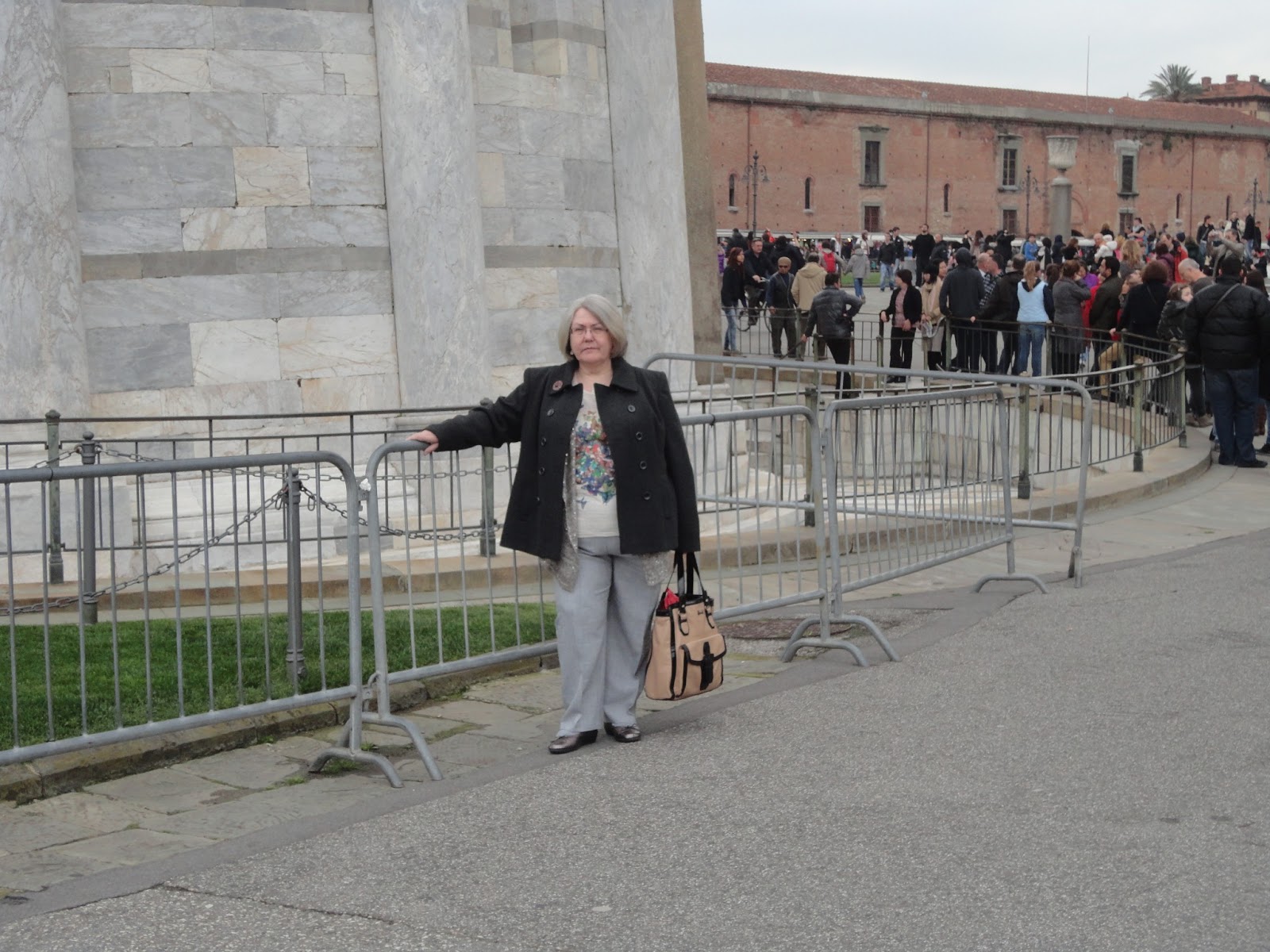
Later in the week we spent a day in Pisa.


Of course, the resident Calvinist was in attendance. It was after all a wee treat for her **th birthday


Cardinal Sandri: Cardinal Secretary of State Tarcisio Bertone's replacement?


On the afternoon of Thursday, March 21, Pope Francis received in audience His Eminence Leonardo Cardinal Sandri (69) (above), Prefect of the Congregation for the Oriental Churches. This was the first audience granted a dicastery head after the inauguration of the pontificate. Of course, this may simply have been a courtesy as Cardinal Sandri is both an Argentinian national and, like the Holy Father himself, of Italian parentage.

However, there is another possible interpretation. In the days following the inauguration of the late Benedictine pontificate, Pope Benedict’s first audience with an American prelate was not with any of the Cardinal Archbishops but with the Archbishop of San Francisco, not a Red Hat See. A short while later it was announced that that prelate, the then Most Rev Archbishop William (Bill), later Cardinal, Levada, was to replace Cardinal, by then Papa, Ratzinger as Prefect of the Congregation for the Doctrine of the Faith.

Cardinal Sandri is a product of the Pontifical Ecclesiastical Academy, Class of ’71. As is the case with most, indeed, nearly all, alumni of the Academia he holds a doctorate in Canon Law. And as is the case with ALL alumni, he is fluent in several languages: besides his native Spanish and, obviously, Italian, he has also mastered French, English and German. As a canonist Latin is a given. Perhaps academic/classical Greek as well.

One of Cardinal Sandri’s classmates was Archbishop Carlo Maria Viganò, currently Apostolic Nuncio to the USA and formerly Secretary-General of the Governatorate of Vatican City State (July 16, 2009 to September 3, 2011). Mgr Viganò was removed from that post under somewhat controversial circumstances. Another was Lorenzo Baldisseri, the current Secretary of the Congregation for Bishops (appointed January 11, 2012) who was Secretary of the Conclave (and who can therefore expect to be created cardinal in early course).

(NB: I originally drafted this post, but did not then publish it for various reasons, on March 23 before leaving for a short break in Florence. It has subsequently emerged that Pope Francis placed his then un-needed red zucchetto on Mgr Baldisseri's head when the latter made his obeisance after the cardinals at the conclusion of the Conclave, signifying his intention to name him cardinal at his first consistory.) 

Cardinal Sandri entered the diplomatic service of the Holy See in 1974 and served in the nunciatures in Madagascar and Mauritius before being recalled to Rome in 1977 to work in the Secretariat of State. In 1989 he was sent to the nunciature in Washington. While there he also served as Permanent Observer of the Holy See before the Organization of American States. On August 22, 1991 he was appointed Regent of the prefecture of the Pontifical Household. Eight months later, on April 2, 1992, he was appointed Assessor of the Secretariat of State for General Affairs.

Elected titular Archbishop of Cittanova and named nuncio in Venezuela on July 22, 1997, His Eminence was consecrated bishop on October 11, 1997, in St Peter’s at the hands of then Cardinal Secretary of State Angelo Sodano assisted by Cardinal Juan Carlos Aramburu, archbishop emeritus of Buenos Aires, and by Giovanni Battista Re, then titular archbishop of Vescovio, Substitute of the Secretariat of State for General Affairs (who, as the senior Cardinal Bishop still an elector, was acting dean of the recent Conclave).

On March 1, 2000, Archbishop Sandri was transferred to Mexico. However, a mere six months later, on September 16, 2000, he was recalled to Rome and appointed Secretary of State Substitute for General Affairs, sostituto (in effect the papal Chief of Staff). When Blessed Pope John Paul II was unable to read his speeches, it was Mgr Sandri, and NOT as the popular press had it the papal Secretary Archbishop, now Cardinal, Dziwisz, who read them for him. It was also Cardinal Sandri who, in what may have been a breach of protocol, announced the Pope’s death to the world from St Peter’s Square.

Appointed Prefect of the Congregation for the Oriental Churches on June 9, 2007, he was raised to the cardinalatial dignity at the consistory of November 24, 2007. He enjoyed the honour and privilege of being No 1 on the list of new cardinals.

Prior to the recent Conclave, Cardinal Sandri was regarded as papabile. It is now entirely possible that the granting of this audience on March 21 may indicate that he is soon to be appointed Cardinal Secretary of State in succession to Cardinal Bertone. Some would argue, persuasively it must be said, that a non-Italian Pope would have to have an Italian Secretary of State. However, one of Cardinal Bertone’s great failings was his involvement, meddling, in both Italian civil and ecclesiastical politics. Cadinal Sandri is an ethnic Italian but has clean hands in this regards.

Wednesday, 21 November 2012

Savita Halappanavar: abortion was the last thing she needed


On Monday, November 19, The Herald published a Letter to the Editor from one Veronica Wikman. Ms Wikman is unknown to me but she describes herself on line as “a native Swedish linguist and freelance translator, living in Edinburgh since 1997”.

Her letter was headed “Ireland must adopt a more enlightened approach to the rights of women” and it began: “Savita Halappanavar can now be added to the long list of women who have been killed in the name of religion...”

Naturally, on reading this I immediately drafted a reply. And equally naturally, I found on Tuesday morning that it had not been published. Nor was it published today, Wednesday. (Plus ça change plus c’est la même chose).

My epistle to The Editor at The Herald read:

“Dear Sir

Savita Halappanavar, aged 31 years, an Indian citizen (from Belgaum, Karnataka) and a Hindu who practised locally as a dentist, died on October 28 in University Hospital, Galway, Ireland. The cause of death has been reported in India to have been “severe septicaemia with disseminated intravascular coagulation (DIC), a life-threatening bleeding disorder which is a complication of sepsis, major organ damage and loss of the mother’s blood due to severe infection” (The Hindu, Bangalore, Friday, Nov 16).

The Hindu interviewed one of India’s leading consultants in Obstetrics and Gynaecology, Dr Hema Divakar, President-elect of the Federation of Obstetric and Gynaecological Societies of India (FOGSI). The informed observations of this professional put the lie to the accusation that Mrs Halappanavar can “be added to the long list of women who have been killed in the name of religion” (Veronica Wilkman, Letters, Nov 19).

Dr Divakar told The Hindu: “Based on information in the media, in that situation of septicaemia, if the doctors had meddled with the live baby, Savita would have died two days earlier.” That is, medically abortion was contra-indicated.

In some quarters, it has been suggested that because Mrs Halappanavar was a dentist by profession she would have been much more aware of the medical implications of what was happening to her and thus if she had begged the doctors to perform an abortion, they should have obliged.

But Dr Divakar stated: “Having understood that the baby was not going to make it, the couple would have asked for termination. But as Savita’s infection may have required aggressive treatment at that stage, doctors must have felt the need to prevent complications. The usual [practice] is to meddle the least till the mother is stable.”

Sadly, the outcome was tragic. But it wasn’t that tragic that the pro-abortion lobby was going to pass up what it saw as a huge opportunity to bring pressure to bear on the Irish government. They then spent two weeks preparing last week’s spontaneous demonstrations and news stories.

It should be remembered that midwifery care in Ireland is amongst the best in the world; much safer than it is either here or in the USA. At least three women died last year in England and Wales from abortion gone wrong. God knows how many died in the USA. None did in Ireland.

Yours etc”

I would like to point out that the names of the three women who died have been published on the SPUC website, but I had no wish to bring further distress to the families and friends of the deceased.

One is left wondering why The Herald did not publish my letter. Too long? No, at 387 words it is 13 short of the magical figure of 400 (which they often ignore anyway). Factually controversial? Hardly, it would take a newspaperman only a couple of minutes to check on line that my references weren't bogus. Badly written?Well, others must judge that but at least one communications professional who has read it described it as "excellent".

So bias seems the only likely explanation. Surprise, surprise.

Thursday, 15 November 2012


Appointment of Experts to the General Synod of Bishops XIII
From Missionary Catholic Ireland: One!

(An edited version of this was recently published by The Scottish Catholic Observer.)

For the last quarter of the 19th Century and most of the 20th, the missionary activity of the Catholic Church — the “Old Evangelisation”, as it were — was inextricably linked to Catholic Ireland; and for much of the latter century this included the diaspora settled in the three countries of Great Britain. Indeed, during that century, the alma mater of your humble but esteemed scrivener here, Our Lady’s High School, Motherwell, produced more priests than any other school in Great Britain, and perhaps even Ireland itself. One ended up in the Sacred College of Cardinals, but most went on the missions.

It was, then, somewhat of a surprise that when Archbishop Nikola Eterović, the Croatian Secretary General of the Synod of Bishops, announced the names of the 45 Adiutores Secretarii Specialis (or Experts) approved by Pope Benedict to assist the Fathers of General Synod XIII on “The New Evangelisation for the Transmission of the Christian Faith”, only one was an Irishman: Rev Professor Dr Éamonn Conway.
Fr Conway, a priest of the Archdiocese of Tuam, is Head of Theology and Religious Studies at Mary Immaculate College, Limerick. Formerly President of the European Society for Catholic Theology, he is currently President of the International Network for Societies of Catholic Theology, which has the delightful acronym INSeCT.

Only two experts have been recruited from Great Britain; both of them are lay, and it may surprise some that 50% of them is a woman. This is Dr. Caroline Farey, a Professor at the Maryvale Institute, Birmingham, where she directs the BA programme in Applied Theology for Catechesis. She also lectures in Philosophy at St Mary’s College, Oscott, Seminary of the Archdiocese of Birmingham, where she teaches Metaphysics, Epistemology, and on St Thomas Aquinas.

The other British expert has also been tapped from the Maryvale Institute, its Deputy Director, Professor Petroc Willey. Encouraged by Cardinal Schönborn of Vienna (who is likely to enter the next conclave as papabile despite a recent little local difficulty) in 2008 Dr Willey co-authored (with Professor Barbara Morgan and Fr. Pierre de Cointet) “Catechism of the Catholic Church and the Craft of Catechesis”.
The Maryville Institute is entirely independent of the Catholic Bishops’ Conference of England and Wales. Doubtless most of that hierarchy will be amazed that none of their own experts have been recruited by the Holy Father and Archbishop Eterović. But will they be able to read the runes?

Of course, although Scotland provides no Experts specifically for the General Synod, we do have several very gifted priests working in the Vatican who may be called upon to contribute their various gifts in different ways during the three weeks of the Synod (October 7-28). Principal among these is Monsignor Leo Cushley, and he can expect to be particularly busy. As Head, caposezione — I know, it sounds a bit Mafia-ish — of the English Language Section of the Secretariat of State he is the Holy Father’s English Language Interpreter. And when the Pope has no prior call on his services, he is also the Cardinal Secretary of State’s, Cardinal Bertone’s, interpreter. And there are going to be an awful lot of English speaking prelates (and others) meeting with both in coming weeks. (Not to mention the fact that his other many duties and responsibilities won’t go away for the month of October.)

Mgr Gerard McKay, a judge of the Roman Rota, has for some considerable time now been a consultor to the Vox Clara Committee which produced the new English translation of the Roman Missal. This, of course, underpins the New Evangelisation in the Anglophone Catholic Church. And as an official of the Doctrine Section of the Congregation for the Doctrine of the Faith, Mgr Patrick Burke may have much to ponder in coming weeks.

As to the remaining 42 experts appointed to the Synod, 18 have been recruited from within Italy, although four of these are non-Italians (two Spanish, one Serbian and one Nigerian), 6 from the rest of Europe, 6 from North America (five from the USA and one from Canada), 3 from Latin America, 6 from Africa and 3 from Asia.

Ten of the 45 Experts are female, seven religious and three laywomen. Unsurprisingly, neither of the two American nuns is associated with the Leadership Conference of Women Religious, the USA Green Party at prayer.

Of the 35 male Experts, one of the Italian appointees ensures that for three weeks in October there will be Four Popes of Rome. To add to His Holiness Pope Benedict XVI, the real Pope, as regular readers will know, there is the Red Pope, currently His Eminence Fernando Filoni, Cardinal Prefect of the Congregation for the Evangelisation of Peoples (Propaganda Fide as was before a certain Paul Joseph Goebbels got propaganda a bad name) and the Black Pope, Fr Adolfo Nicolás, Superior General (though usually called the Father General) of the Society of Jesus (the Jesuits).

Joining this holy trinity (as opposed to THE Holy Trinity) will be Professor Rodolfo Pope, Professor of Art History and Aesthetics at the Pontifical Urban University in Rome.

Another of the male Experts is a priest to whom Holy Family Parish, Mossend, can lay part claim. Fr Marko Ivan Rupnik is a Slovenian, a Jesuit, an expert in missiology, a theologian and an artist. More specifically, he is a theologian artist in the great mosaic tradition of Eastern iconography. In September 1991 he was appointed Director of the newly established Centro Aletti, Rome, by its founder, Fr Clarence Gallagher SJ, the Rector of the Pontifical Oriental Institute Rome, another alumnus of Our Lady’s High School and, to quote himself “a wee guy from the Clydesdale Road”.

Our surprise at the dearth of experts from the Irish Church and its diaspora — to Fr Conway can be probably be added the entire North American contingent (a Butler, a Driscoll, a Martin, a Miller, a Peters and a Goulding) and possibly the Englishwoman — is perhaps explained by the first paragraph of the Introduction to an INSeCT colloquium held at De Paul University, Chicago, June 14-16, 2011. This read:
“The Rapidly Changing Global Context: In the past fifty years the world population of Catholics has doubled. At the same time, the centre of gravity in the Catholic world has shifted from Western Europe to the Southern Hemisphere. The largest concentrations of Catholics live today in Brazil, the Philippines, and Mexico. Even more remarkably, the Vatican Yearbook reports that the Catholic population of Africa has increased by 33% in the past decade alone. By the year 2050, it is expected that fully 70% of Catholics will reside in the global south.”

That is why we have to re-evangelise the global north.

PS: I would advise readers who appreciate religious art to look up the Capella Redemptoris Mater on the internet and take the stunning visual tour. This is the larger of the Pope’s private chapels. If I remember correctly, it was when Pope John Paul II was celebrating the 40th anniversary of his episcopal ordination that the Sacred College of Cardinals made a presentation to him of a substantial sum of money which he chose to use for the redecoration and rededication of this chapel wherein the Lenten Retreat of the Papal Household is held and the Advent sermons of the Preacher to the Papal Household, currently Father Raniero Cantalamessa OFM Cap, are delivered.

Fr Marko Rupnik was chosen for the task and the late Cardinal Tomáš Špidlík SJ, whom Fr Clarence also recruited to the staff of the Centro Aletti, advised on the theological theme.


Monday, 17 September 2012

The Pope in the Lebanon: Part Two


(With apologies, since this should have been posted a couple of days ago. Those days have been lost to a bad cold.)

So what is meant by “the Oriental Church”? Where exactly is the ecclesiastical “Orient”?

A rule of thumb might help. Take a map of Europe and North Africa. Place your ruler along the eastern coast of Italy. Barring the countries in central Europe, as you sweep your ruler round clockwise, the countries it traverses, right round to those on North Africa’s Mediterranean coast, are the home of Eastern Christianity, Catholic and Orthodox. All the way down to Ethiopia and across to India. But nowadays you have to take into account the various Diasporas.

I had the great honour of meeting a group of one part of one element of those Diasporasa in Rome during the weekend of the consistory in November 2007. These were a group of Iraqi Chaldean Catholics who had emigrated to the USA. They were present to see and support their Patriarch, Emmanuel III (Emmanuel-Karim) Delly, Archbishop of Baghdad, honoured by Pope Benedict with elevation to the Sacred College. As Patriarch of Babylon of the Chaldeans, Cardinal Delly joined the Order of Cardinal Bishops. As such, on the Sunday morning at the Ring Mass he was Principal Co-Concelebrant with the Holy Father.

The pictures below were taken by me, using a friend’s camera in St Peter’s Square on the Saturday morning (November 24, 2007) immediately after the public consistory for the naming of the new cardinals. Cardinal Delly is a lovely wee man. He greatly impressed with the way he concelebrated on the Sunday morning. In Latin. The love of his people for him was tangible. I must apologise for the fact that they are so poor. I’m not very good at taking pics, but to make matters worse, I got caught up in this scrum totally unexpectedly.

Pictures of His Beatitude Cardinal Mar Emmanuel III Delly, Patriarch of Babylon of the Chaldeans.


In the early Church there were three major centres: Rome, Alexandria and Antioch. In the earliest laws of the Church, the Bishops of these three cities were accorded the status of a Patriarch and the Bishop of Rome, as successor to Peter, was accorded the position of honour, he was primus inter pares. But each of the Patriarchs governed within his own territory. The Bishop of Rome had no jurisdiction over the other Patriarchs. And he did not appoint them. Nor did he appoint their bishops.

It would take too long, and it would all be rather boring, to recite the history of the development of the modern Patriarchates and the Rites and Churches associated with them. But today there are 5 Eastern Rites, each with a Patriarch. These, obviously, are geographically in the East.) Within each Eastern Rite there are separate territorial Churches headed by a Bishop, an Archbishop or a Major Archbishop. In all, there are 22 sui iuris Eastern Rite Churches in full communion with Rome (this legal term means that they have full competence to manage their own affairs; for example in Synod they elect their own bishops, who are then approved by the Pope). These are:

Alexandrian Rite: Coptic Church (Patriarchal), Ethiopic Church (Archiepiscopal);

Antiochean Rite: Maronite Church (Patriarchal), Syro-Malankar Church (Major Archiepiscopal), Syrian Church (Patriarchal);

Armenian: Armenian Church (Patriarchal);

Chaldean (Syro-Oriental): Chaldean Church (Patriarchal), Syro-Malabar Church (Major Archiepiscopal)

Byzantine (Constantinian): Albanese Church, Belarussian Church, Bulgarian, Croation Church (Episcopal), Greek Church, Greek-Melkite (Patriarchal), Hungarian Church (Episcopal), Italo-Albanese (Episcopal), Macedonian, Romanian Church (Major Archiepiscopal), Ruthenian Church (Archiepiscopal), Slovak Church (Major Archiepiscopal), Ukrainian Church (Major Archiepiscopal).

With the exception of most of the Byzantine Rite Churches, the association with the Middle East should be obvious.

NOTE: In the West, there is only one real Patriarch, the Pope. However, there are two minor Patriarchatess: the Patriarch of Venice (dating from 1457) and the Patriarch of Lisbon (October 22, 1716, and the Golden Bull In Supremo Apostolatus Solio). In the Latin Rite there are also the Patriarch of Jerusalem and the Patriarch of the East Indies [dating from 1886, the Archbishop of Goa and Damão, India].